


Linda Lines, the narcotics cop loses bags of cocaine
http://www.naplesnews.com/news/2009/oct/19/Cocaine-Naples_police-missing-training-coke/
The story would be sad except for the fact the cop that lost the cocaine is named Linda Lines. There is a term for that “nominative determinism” meaning your name influences what you do. The NPR show Click and Clack have a humorous list of staff but there are many people with names that either fit their career or seem to make that career choice really bad.
Consider these:
- Dr. Hack, a surgeon
- Dr, P. Atchu, urologist
- Sue Yoo, attorney at law
- Brad Slaughter, manager of meat department
- Oliver Loser, politician
http://www.oddee.com/item_96755.aspx
Military Fights Cavities with Xylitol Gum in MREs
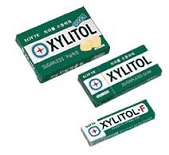 In February 2007 I wrote two articles about how to prevent and cure dental cavities. One of the things I uncovered was Xylitol, a natural sugar, kills the bacteria that causes cavities. When I was in Thailand I saw that all the chewing gum there was sweetened with Xylitol. But in the Americas gum was either sweetened with sugar or toxic artificial sweeteners. It looks like finally the USA has caught up with Asia. The US Military will be putting gum sweetened with Xylitol in the Meals Ready to Eat (MRE) that soldiers eat when in the field. http://www.armymedicine.army.mil/hc/healthtips/13/200403mre.cfm
“Don’t wait to start using xylitol gum,” said dela Cruz. “The gum can be purchased on the local economy and at commissaries, although the choice of flavors may be limited at smaller commissaries. Read the ingredients on the label and make sure that xylitol is the first ingredient. Chewing the gum at least five minutes is extremely important for maximum effectiveness.”
From the US Military Fact Oral Health Sheet – Fight Tooth Decay With Xylitol
You brush and floss your teeth daily, visit the dentist every year for an exam and a cleaning, avoid sugary foods and treats, and drink fluoridated water. Do you also have to give up chewing gum or mints?
No! In fact, some gum or mints can actually give you more protection if they contain a sugar called xylitol (zy-li-tol). It is a natural sweetener found in fruits and vegetables such as yellow plums, strawberries, and raspberries. It is usually made from certain hardwoods such as the birch tree.
How does xylitol work?
- Blocks bacteria from producing the acids that cause tooth decay.
- Decreases the level of cavity-causing bacteria.
- Decreases plaque formation.
- Enhances remineralization (hardening) of weakened teeth.
Because it fights bacteria so well, people who chew xylitol gum can reduce their risk of cavities. This is especially important for deployed Soldiers who may be at higher risk of tooth decay if they are not able to brush regularly and eat meals with high
amounts of carbohydrates (starch), such as Meals-Ready-to-Eat (MREs).
Other reasons to chew xylitol gum
- It is safe for the whole family.
- Has 40% less calories than sugar.
- Makes your mouth feel fresh and cool.
- Tastes as sweet as sugar with no aftertaste.
- You can buy it at the candy counter.
- It is a natural sweetener.
- It relieves “dry mouth” by increasing saliva.
- It can reduce ear infections.
How can I get the most benefit from xylitol?
- Chew 1.5 – 2 grams of xylitol gum for 5 minutes, 3 to 5 times a day.
- Chew xylitol gum after meals or as a snack.
- Xylitol-sweetened mints can be used by people who can’t or prefer not to chew gum.
How do I find gum or mints that contain xylitol?
Read the label. Xylitol should be the first ingredient listed on the label before other sweeteners. If you can’t find xylitol gum or mints at your PX or Commissary, ask the manager to order them.
Bacterial Computer Article gets Peer-to-Peer Review on Slashdot
The Guardian, a mainstream media outlet, does an article about a scientific paper. A forum thread is started about the article on Slashdot, the extremely popular forum of serious computer geeks. The participants of Slashdot post scathing reviews. Read the comment, they tear the article apart. But more interesting, the actual co-author of the paper posts a comment.
His paper is about computer technology and it gets mentioned on a forum about computer technology and the co-author happens to be a member of that forum. But this is not some formal university affiliated journal, this is an informal online forum. Anyone can join and post.
As the co-author of the paper, Andrew Martens says in a comment on Slashdot, “The Guardian article is rather misleading and inaccurate”. In the old world top down system the truth would not get very far. If pressured the professional gatekeepers might decide to print a redaction on some back page but in the new highly distributed peer-to-peer world that truth and many others are almost instantly spread to everyone who is interested.
The participants on Slashdot criticized the significance of the research. In his comment, Andrew Marten defends his works saying, “I’m more excited about the proof-of-concept: we can encode a mathematical problem by using a molecule, hand it to a living organism, and get a correct output.”
Oddly enough that is basically what happened with Slashdot. The problem of analyzing a complex issue in encoded and its handed to living organisms that get the correct output. The benefits of bacterial computers is hyper parallel processing. The communications technology of the Internet has allowed humans to freely merge their thinking capabilities to very quickly find the solutions to problems.
This is serious peer review and more, its collaboration.
 Predictive Innovation Training
 Predictive Innovation: Core Skills Book
 RoundSquareTriangle.com